Translate

Custom Search

Naturopathica

Sunday, July 3, 2011

How to Harvest Bok Choy Seeds

Photo 1: Bok choy plant forming seed pods

Photo 2: Sunlight is illuminating the bok choy seeds inside the pod.

Photo 3: Bok choy seed pods fully mature and brown.

Photo 4: Collecting seeds from bok choy plants

You probably have noticed that some of your plants have grown tall, flowered and formed seed pods.  Instead of cutting these plants down and chucking them in the trash or compost, harvest your seeds for your next planting.  It is easy to do, and saves you from buying more seeds.  I collected more seeds from one single bok choy plant, than what would come in an average seed packet.  I share my extra seeds with family and friends.    

How to Harvest Bok Choy Seeds

Materials: 
  • 5 gallon bucket or brown grocery paper bag  
  • Garden shears
  • Strainer with 1/8-inch to 1/4-inch holes
  • Large bowl to catch seeds as they fall
  • Seed container (e.g., envelopes, plastic snack bags, etc.)

Directions: 
  1. You will know when bok choy plants are ready to form seeds when the bok choy plants grow tall and produces flowers.  These blooms will disappear and seed pods will form in its place upon pollination.  
  2. You should collect the seeds when the plant is dry so avoid collecting them in the early morning or after they have been watered.  
  3. When some of the seed pods start to turn brown, use your garden shears to cut the plant at the base of its stalk.  Note: You can wait until the pods turn completely brown to skip the drying process (step 4), however, you risk some seed pods opening and releasing seeds into the garden.  See Photo 3.  You can also cut the stalk when the pods are still green, but do not cut them too early.  If you do, you risk ending up with little to no seeds.  I chose to harvest my seeds a little early because I have a small garden, and I am eager to reuse that garden space.  See Photo 1.  
  4. Tip: To find out whether your seed pods have seeds in them, hold them up against the sunlight.  Turn the pod so that the sun will hit the pod in a way that illuminates the contents inside.  If you see round seeds inside about (about 1/8" in diameter), you can cut the pods off for drying.  See Photo 2.   
  5. After you cut the stalks, place them in the bucket or paper bag upside down.  Allow the seeds to completely dry out in a cool, dry location.  
  6. You may notice that some of the seeds have already been released in the bucket or paper bag during the drying process.  This is a good sign.   Place the strainer over the large bowl.  Then take a seed pod and use your hands to split it in half lengthwise to release the seeds.  You may have to twist or rub the pods a little to work the seeds loose.  The small brown seeds will fall through the strainer into the bowl, but bigger pieces of debris will remain in the strainer.  After you break your last pod, dump the rest of the contents of the bucket or paper bag into the strainer to collect any remaining seeds.  See Photo 4.
  7. Remove the strainer.  Then pour the seeds into your seed container.  Label the seeds with its name and date collected.  Then store seeds in a cool, dry location until you are ready to plant them in the garden.    

Last Updated: July 25, 2011
Saturday, July 2, 2011

Danver Half Long Carrots

Photo: Danver's Half Long Carrots and Mixed Lettuce Leaf

I harvested a few Danver's half long carrots the other day.  They roasted beautifully in the oven next to the chicken, garlic and onions.  The carrots retained a lot of its flavor and texture throughout the roasting process.  

This is my first time planting carrots.  Having crumbly, garden soil and an automatic watering system makes it super easy to grow them.  I planted 16 carrot seeds per 1 square foot to maximize planting space.  I initially planted 2 square feet of carrots (i.e., 32 carrots) with the intention of reseeding 1 square foot at a time for a continuous supply of fresh carrots, but I am thinking about planting more.        

I chose Danver's half long carrots because I do not have a deep garden bed.  However, you can technically harvest carrots at anytime (i.e., from baby size to full length size).    


Wednesday, June 1, 2011

Free Bamboo Plant by Mail


Photo: Bamboo Plant  May 2011 Free Plant of the Month by freeplantsbymail.org

Free Plants By Mail (freeplantsbymail.org) was started by local growers as a way to use the surplus plants from nurseries and also as a way to support The Nature Conservancy.  Free Plants By Mail offers a new free plant each month.  This month they are offering bamboo plants.  Although the plant itself is free, you do have to pay a small shipping and handling fee of $6.95.
This organization also has over 100 plants available for sale on their site.  100% of the proceeds from the sale will go to The Nature Conservancy.
Click here to view Frequently Asked Questions (FAQ).

Monday, May 16, 2011

Seed Favors

Photo Credit: Recycled Ideas

Photo Credit: Recycled Ideas

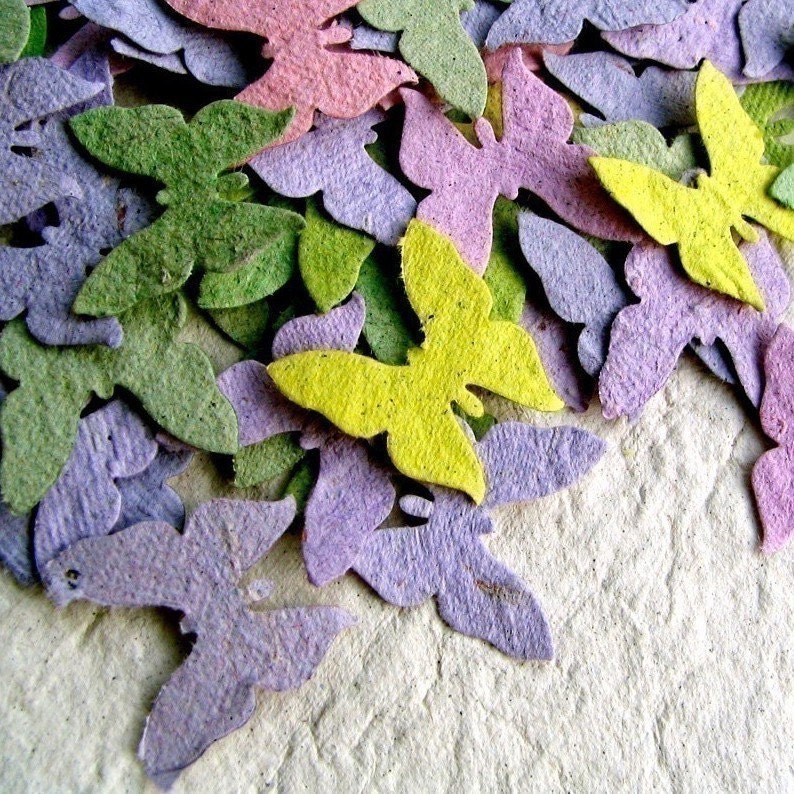
If you are planning a wedding, baby shower or birthday party soon consider giving your guests eco-friendly plantable seed favors.  I love the seed favors created by recycledideas.  Their handmade seed favors are available in the shapes of cowboy boots, hearts, stars, puppies, birds, trees, bunnies, giraffes and more.  They also have plantable confetti, seed bombs, plantable seed cards, tags and more.


Sunday, May 15, 2011

Windowsill Basil Planter

Photo: Windowsill basil planter.  From left to right, cinnamon basil, opal basil and sweet basil.


The Smith & Hawken Basil Grow Pot I started a while ago is growing very nicely.  I am surprised by how flavorful and fragrant the leaves are!  Although I have basil growing in the yard, I do enjoy having some inside the house.  

Click here to view my earlier post on how to easily start grow pots, and to view the steps I have taken to start this grow pot.   

Saturday, May 14, 2011

Homemade Vanilla Extract

Photo 1: 12 Madagascar vanilla beans split lengthwise steeping in a jar of vodka.

Photo 2: The vanilla bean on the top was split lengthwise with a knife.  
The vanilla bean on the bottom is a whole vanilla bean.

I started making homemade vanilla extract about a month ago.  It is a lot easier than I imagined.  All you have to do is place several vanilla beans (split lengthwise).  See Photo 2.  Then steep the vanilla beans in vodka for a minimum of three weeks.  See Photo 1.  The longer the vanilla beans steep in the vodka, the better the flavor.  I can still detect a slight smell of alcohol so I am going to allow it to sit longer.  [Update: 3 months later I can no longer detect the smell of alcohol.  Now it smells absolutely heavenly!  I have a smile on my face every time I open this jar.  It fills the room with the smell of vanilla.]  For instructions and more information about making vanilla extract, click here.

Quick Tips: 
  • Consider purchasing vanilla beans online.  Grocery stores charge a lot of money for only a couple of vanilla beans.  I purchased mine from www.vanillaproductsUSA.com, but you can also try places like Amazon or eBay.   
  • If you want to make a "classic" vanilla extract, use Madagascar Vanilla Beans.  Otherwise try experimenting with other kinds of vanilla beans and liquor.  
  • Make sure you use enough vanilla beans or you will just end up with vanilla flavored alcohol.  According to Instructables.com, you need 6 whole vanilla beans to make 1 cup of single fold vanilla extract. 
Source: http://www.instructables.com/id/DIY-Vanilla-Extraction/

Last updated: July 25, 2011

Monday, May 9, 2011

Last Chance - Free Composting Classes

Free composting classes are being offered this Saturday (May 14, 2011) at Antioch and Kensington County.  Click here to reserve your spot.  This will be the last free composting class of the season.  The next one will be offered in August.
To see if your city offers free composting classes, go to your city's website and look under your city's waste and recycling department or perform a web search for "free composting classes in (enter your city here)".  Your city may also offer free or discounted composting bins, reading materials, and free compost.

Friday, May 6, 2011

Thursday, May 5, 2011

Free Composting Workshops

Contra Costa County is offering a free two-hour composting workshop to its residents.  All you have to do is call and reserve your spot.  Click here to view Contra Costa County's current schedule for free composting classes.
I have seen other cities/counties (e.g., Santa Clara, Solano, San Francisco, etc.),  offer similar free programs so perform a search for free composting classes in your county or check out your city's website and look under the recycling & waste department. You may even find that they offer free compost or free or discounted compost bins.

Wednesday, May 4, 2011

Seed Organizer

I harvest and store seeds from my existing plants.  In the past I blogged about using photo albums as a way to store and organize seed packets, and take gardening notes.  This worked well for seed packets that had small to medium-sized seeds, but I had so many seeds that I ended up with ziplock bags full of half used seed packets and loose seeds.  Tired of the mess, I found another way to store and organize all of my seeds.  

Photo 1: Shoebox/Photo Storage Seed Organizer


  • Seed Storage Box.  You can transform a shoebox or photo storage box into a seed organizer.  I bought these decorative shoe box/photo storage box at Marshalls for about $3.  However, you can transform an ordinary shoe box or photo storage box into a seed organizer.  Just place an object inside the box to act as a bookstand to keep your seed packets upright (See Photo 1).

Photo 2: Seed packets for the new seed organizer


  • The Seed Packets.  Instead of throwing the seed packets into the box, I created new seed packets out of envelopes to give it a uniform look, and to keep the seeds from spilling out of their packets (See Photo 2).   You can organize the seed packets alphabetically or by category (e.g., herbs, flowers, vegetables, etc.).  You can also create a box for each category or for each new year.  

  • How to Make Seed Packets
    • Materials
      • Envelopes (that fit inside the box)
      • Pen
      • Scissors
      • Elmer's Glue
      • Old Seed Packets (optional)
      • Individual Photos of Plants (optional)
      • Funnel (optional)
    • Directions
      • Place the seeds in the envelope or if you like you can wait to put them in at the end.  If you do wait to put them in at the end, use a funnel to assist you.  
      • Cut a small (1.5" to 2") slit on the folded line of the flap.
      • Seal the envelope.
      • Cut the seed packet so that you have a front and back side of the packet.
      • Paste the front of the seed packet to the front of the envelope (See Photo 2).  Alternatively, you can glue a photo of the plant, and then label it with a marker or pen.   
      • Paste the back of the seed packet to the back of the envelope (See Photo 2).  Alternatively, you can write down planting instructions and other notes on the back.
      • Repeat this process to make more seed packets.  Make sure that the photos and writing are facing the same direction so that it will be easier to catalog and look-up the seed packets.

Tuesday, May 3, 2011

Free Banana Trees by Mail

Photo: Banana Trees.  May 2011 Free Plant of the Month by freeplantsbymail.org

Free Plants By Mail (freeplantsbymail.org) was started by local growers as a way to use the surplus plants from nurseries and also as a way to support The Nature Conservancy.  Free Plants By Mail offers a new free plant each month.  This month they are offering banana trees.  Although the plant itself is free, you do have to pay a small shipping and handling fee of $6.95.
This organization also has over 100 plants available for sale on their site.  100% of the proceeds from the sale will go to The Nature Conservancy.
Click here to view Frequently Asked Questions (FAQ).

Monday, May 2, 2011

College Football Stadium Converted into an Urban Farm

Photo: Credit


Paul Quinn College turned its football stadium into a 2-acre urban farm so that it can:
  1. Help address the lack of affordable, healthy food options available to economically depressed areas in the City of Dallas; 
  2. Create a replicable model for achieving sustainable urban re-development built around providing safe food options to economically depressed communities; and 
  3. Create a facility that will deliver preventative health care (that focuses on nutrition and exercise) to the underserved community surrounding the College.
For the full story, click here.

Free Garden Soil and Plants

craigslist
Craigslist.org can be a good source for free garden soil, plants and other free stuff.  To see what is free in your area visit their website and select your location.  Look under the "for sale" category, and select "free."

Important: Practice caution and use your common sense when posting or responding to these ads.  Below are some safety tips to consider:

  • Tell a friend or family member where you are going and when you expect to return.
  • Bring a friend or family member with you.
  • Bring a cell phone with you if you have one.
  • Request that the free stuff be placed outside the home for pick-up if possible.  
  • Trust your instincts.  If your gut is telling you something is wrong, then leave immediately.
  • If you are posting an ad to give away free stuff, place the items in front of your house to avoid having strangers in your home.  
  • When posting an ad for free stuff, keep in mind you are posting an ad for the world to see so be careful of what information you put out there.  I do not post my address, full name or phone number.  I only list my city and a nearby cross street.  I also use the anonymous email option provided by Craiglist.  I then ask people to email me with their name and contact information.  This allows me to screen emails and I can narrow the number of people I give my address and phone number to.  After I have found a person to pick up the stuff, I delete the ad.     

Friday, April 29, 2011

Reminder: UCB Spring Plant Sale Tomorrow


University of California Botanical Garden at Berkeley is having its Public Spring Plant Sale tomorrow between 10 AM and 2 PM.  They have exotic and unusual plants, and specialize in mediterranean-climate plants including California natives, and plants from South Africa, Australia, the Mediterranean region and South America.  For a list of plants that are available and more information about the Spring Plant Sale click here.  They accept cash, check or credit card.

Easier Way to Start Grow Pots

Photo: Successfully Sprouted Basil Seeds in Smith & Hawken Grow Pot

I finally got around to trying the Smith & Hawken Basil Grow Pot that I purchased last December.  The Smith & Hawken basil grow kit comes with a pretty glazed planter, soil and 3 different seed packets (i.e., Sweet Basil, Cinnamon Basil and Opal Basil).

The Smith & Hawken Planting Instructions: 
Remove the seeds and soil bag from the container.  Open the soil bag and pour the soil into the container.  Add lukewarm water to moisten.  Open the seed packets over a paper towel so that the seeds do not get misplaced.  Sprinkle seeds evenly on the soil, with one variety per section.  Press seeds gently into the soil no more than 1/4"deep.  Place pot in a sunny location.  Continue to keep the soil slightly moist by misting the soil until the seeds sprout.  As the plants grow,  gently water whenever the soil feels dry to touch.  Do not overwater, as this will cause roots to rot.  Rotate the planter daily so that each side receives equal sunlight.    

Apt Garden Tips:
  1. Plant Identification.  I divided the soil in thirds, and planted the seeds in alphabetical order (i.e., Cinnamon, Opal and Sweet) so that I will be able to easily identify the plants after they have sprouted.  This works because I can easily identify the front from the back by the design on the planter.  Alternatively, you can use plant markers.       
  2. Sprinkling Seeds.  Hold the seed packet upright and tap the top of the seed packet a few times so that all of the seeds settle to the bottom.  Then snip a small corner off the packet.  Sprinkle the seeds over the soil by turning the packet to the side and gently tapping the other end of the packet so that the seeds come out a little at a time.  This gives you more control over where you want to plant your seeds.  The seed packets come with more than enough seeds.  In fact, I did not plant them all.  I saved some for my outdoor garden.  
  3. Germinating Seeds. Instead of constantly misting the soil to keep the soil moist, just wrap a plastic shopping bag around the planter and tie the handles on the side to seal it.  Then place the whole thing on a sunny windowsill and forget about it for a few days.  The plastic bag will trap most of the moisture.  As the sun warms the soil, the water will evaporate, hit the plastic ceiling, and then "rain" down on the soil again.  After the seeds have sprouted, remove the plastic bag and then water the plants whenever the soil feels dry to touch.          


Thursday, April 28, 2011

DIY Mother's Day Blooming Planter for Under $25


Photo: Blooming Planter full of Daffodils Created for Under $25

Mother's Day is on Sunday, May 8th, 2011.  Instead of getting your mom a cut bouquet of flowers this year, give her a planter filled with blooming plants.  It is more personal, will last longer and provide her years of future enjoyment.  It is easy to do, and it can also be cheaper than purchasing them from a florist.  For example, a blooming planter of calla lillies costs about $50 to $90 at FTD.com.  You can recreate this gift and add some personal touches (e.g. bows, planters, etc.) for less than $25.  Just check your local gardening center to see what is blooming.  Freesias have a wonderful fragrance and were only $3.33 per potted plant at Home Depot.  Other great plant choices are calla lillies, lavender, gardenia, and miniature roses.  You can make the gift even more personal by planting them in one-of-the kind planters that speak to your mom's personality.  For example, if she loves tea, plant some miniature roses in a pretty ceramic teapot.  If she loves shopping, plant some flowers in a sturdy, fashionable purse.

Wednesday, April 27, 2011

Free Plants By Mail

Photo: Marginata, Free Plant of the Month by freeplantsbymail.org

Free Plants By Mail (freeplantsbymail.org) was started by local growers as a way to use the surplus plants from nurseries and also as a way to support The Nature Conservancy.  Free Plants By Mail offers a new free plant each month.  Although the plant itself is free, you do have to pay a small shipping and handling fee of $6.95.  This organization also has over 100 plants available for sale on their site.  100% of the proceeds from the sale will go to The Nature Conservancy.

Tuesday, April 26, 2011

Sluggo: Slug & Snail Killer Certified for Organic Gardening

Monterey LG6515 Sluggo Snail & Slug Control For Organic Gardening - 1 lb Shaker Can

Monterey Sluggo is a cheap and effective way to control the slug and snail problem in your yard.  A little of this stuff goes a long way.  This product is also certified for organic gardening by the Organic Materials Review Institute (OMRI), and it is safe to use around pets and other wildlife.   It does not contain metaldehyde (which is toxic to all organisms); instead Monterey Sluggo's active ingredient is iron phosphate, which occurs naturally in soil.  Iron phosphate is also used as an ingredient in fertilizer.

How it Works:
Slugs and snails find Sluggo appetizing, and are attracted to this bait.  After they eat the pellets, they will cease feeding all together.  They will become less mobile, and will eventually die within three to six days.

Caution: Although this product is certified for organic gardening it does not mean it is harmless.  The Sluggo product label does warn consumers that it will cause moderate eye irritation so avoid making contact with your eyes or clothing, and wash your hands thoroughly with soap and water after use.  The label also warns consumers to avoid contamination of water, food or feed by storage or disposal.

That being said for those of you who are opposed to hand picking snails at night and smashing them *cringe*,  "wasting" beer for beer slug traps, setting up copper barriers and so forth, this is the product for you.


Friday, April 22, 2011

Pitcher Plants from Lowes

Photo: Pitcher Plant in homemade self-watering greenhouse

Last week I purchased a pitcher plant (Sarracenia Purpurea) from Lowes for $4.48.  This plant is supposed to be hardy in my zone.  I intend for this pitcher plant to stay outside on top or near the outdoor dining table so that it can eventually trap mosquitos or flies.

I transplanted it into a makeshift self-watering, greenhouse made out of soda bottles and yarn.  The soil has to be consistently moist so I kept the pitcher moss in Sphagnum moss and planted it in garden soil and topped it off with more moss.  The yarn that I intertwined in the soil leads to the water chamber below and will wick up water when the plant needs it.  The water chamber below holds fish water from my pond.  I take the cover off during the day, and replace it in the evening.  It is doing really well in this set up.
 

Thursday, April 21, 2011

Get Free Trees

Lowes is giving away a million trees to celebrate Earth Day.  Visit your local Lowes on April 23rd to get your free tree.  While supplies last.

Wednesday, April 20, 2011

'Wildman' Brill Edible Plants App

Photo: iPhone Screen Shots [Credit]

"Wildman" Steve Brill recently released his Wild Edibles app!  This app helps users identify edible, medicinal and poisonous plants in the wild.  It also includes harvesting methods, preparation instructions, and recipes to help prepare foraged foods.  The beginners version that contains the most common plants is free.  The full version currently costs $7.99.  For more information about "Wildman" Steve Brill and his apps click here.

Beer Slug Traps

Turn an ordinary yogurt cup into an effective organic slug trap.  Just dig a hole, and place the empty yogurt cup into the hole.  Make sure the soil line is flush with the top of the cup.  Then pour cheap beer into the cup.  The slugs are attracted to the beer, and unwittingly fall into the cup of beer and drown.  It works!  I have caught some pill bugs (a.k.a. roly polies) too.  You can empty them out weekly, and resupply with new beer.

Tuesday, April 19, 2011

Propagating Stragglers

Photo 1

Photo 2

This flowering plant was spreading across the sidewalk (See Photo 1) so I decided to take a small cutting (See Photo 2).  I am attempting to propagate it using this propagation method.

Monday, April 18, 2011

Painted Aspen Print by Matthew Lew

I am in love with this Painted Aspen Print by Matthew Lew.  On his CB2 profile, he has a low budget decorating tip that is suitable for renters.  He suggests making a mosaic statement on an accent wall using 8.5"x11" black and white photo copies of a repeated image.  You can use adhesives that will not damage your wall, and the the project will cost under $25 depending on your wall size. 


Sunday, April 17, 2011

Lizard by the Pond


Spotted this large lizard by the pond today.

UPDATE:  I have seen this big boy sunbathing on the rocks by the pond almost every single day.  It looks like we have a pet lizard!  

Tomatoes: Transplants vs. Seeds


Although tomatoes are easy to start from seeds, I purchased several different varieties of heirloom tomato transplants from Home Depot.  They were selling them for $3.48 each, and they came in 5" peat pots.  So why did I purchase transplants if tomatoes are so easy to grow from seeds?

  1. Early Harvesting Time.  Transplants have been started indoors from seeds several weeks prior to the spring planting season.  This means my newly purchased tomato transplants will set fruit much earlier than a tomato plant started from seed during the normal planting season.  It will continue to set fruit until the first frost in fall.  
  2. Cheaper for People with Limited Gardening Space.  Unless you harvest seeds from an heirloom tomato from the market or can get them on the cheap, it may be slightly more expensive to buy a standard pack of seeds.  For example, Burpee is selling a packet of 50 Black Krim seeds for $3.95.  That packet of seeds cost $0.47 more than a transplant.
  3. Limited Space.  I do not need 50 Black Krim tomato plants.  I only want one for now.  I do not have the space for it, and I am more interested in having a variety of plants in my garden.  
  4. Free Future Seeds.  I can still easily save seeds from the tomatoes my transplants will produce this year, and start my own transplants early next year.   

Saturday, April 16, 2011

Smart Savings on Magazine Subscriptions


Would you rather pay $10.99 per issue or $0.85 per issue?  I purchased a couple of magazines from the grocery store rack during my trip.  I needed something to keep me entertained during the flight back.  One of the magazines I purchased was by Southern Living.  It was a issue focusing on Backyard Retreats.  I purchased a single issue for $10.99, but after doing some research I learned how to get them for as little as $0.85 per issue.  All you have to do is use your free ebates account, and then use the additional coupon code SPRINGMAGS which gives you $5 off your purchase.  If you do not have an ebates account, you should sign up for one today by clicking here.  It is absolutely free, and it will save you lots of money in the future.  Although I used Southern Living as my example, you can apply the $5 discount and additional 26% off on other magazines.

Savings Break Down Using Southern Living Subscription as an Example:

A.  Purchasing 1 Issue at a Time at the Store:
1 issue at the store $10.99

B.  Purchasing 13 issues through EBATES.com and Magazines.com will cost:

13 issues at $19.95 + $5 off coupon using coupon code SPRINGMAGS + 26% EBATES Discount + Free Shipping = $11.06 for 13 issues, which breaks down to $0.85 per issue!

Friday, April 15, 2011

Container Plants Survived Week Long Vacation with Easy DIY Tricks


Photo: butternut squash (left) and early sunglow corn (right) both from seeds

I went on a week long vacation to the tropics.  I started some seeds in containers on March 28, 2011 and left them outdoors in DIY mini-greenhouses to germinate.  Most of them had already sprouted before leaving for my trip.  I watered the plants thoroughly, and used the plastic bag method and homemade greenhouses to keep the soil moist and the plants happy while I was away.  I am happy to report that not only did all of the seedlings survive, but also more seeds have sprouted!

Photo: Romaine Lettuce from seeds

Photo: Cantelope (left) and Cucumber (right) both from seeds

Photo: Bush Bean from seed

Photo: Late Corn (left) and Watermelon (right) both from seeds

UCB Spring Plant Sale 2011


University of California Botanical Garden at Berkeley is having its Public Spring Plant Sale on Saturday, April 30, 2011 between 10 AM and 2 PM.  They have exotic and unusual plants, and specialize in mediterranean-climate plants including California natives, and plants from South Africa, Australia, the Mediterranean region and South America.  For a list of plants that are available and more information about the Spring Plant Sale click here.  They accept cash, check or credit card.

If you have never visited UC Botanical Gardens at Berkeley, you are in for a treat!  This place is enormous and they have many beautiful, inspiring gardens.

Monday, April 11, 2011

Cheap Reusable Plant Labels

I have had a difficult time finding inexpensive plant labels in mainstream stores.  Here are some plant markers that are available online and are eligible for free shipping.  You can write on them with a pencil, and then erase and reuse them.    
Luster Leaf Rapiclip 6-Inch Garden Plant Labels - 50 Pack 840
Luster Leaf Rapiclip 6-Inch Garden Plant Labels - 50 Pack 840 ($4.74 + Eligible for Amazon Free Shipping)


Jump Start Reusable Plant Markers 50 Ct.

Saturday, April 9, 2011

Smart Hanging Basket Liners


If you are tired of constantly watering your hanging basket plants, consider updating your liners with AquaSav's baket liners.  These liners require 50% less watering than standard basket liners.  A layer of 100% recycled post-consumer plastic liner is sandwiched between natural coir fiber.  The replacement liners are inexpensive, and come in various sizes.  Alternatively, you can line the bottom of an ordinary basket liner with pond plastic or even an inexpensive plastic bowl.


Thursday, April 7, 2011

Disinfecting and Reusing Old Planters

I save my transplant packs and plastic pots for future use.  Many of us do.  They are stackable, reusable, take up a small amount of space, and saves us money in our gardening budget.  However, when reusing old planters, I want to remind you to disinfect them prior to planting new seedlings.  If you do not, you may accidentally pass off disease to your new seedlings.

You can easily sanitize your pots by swirling them or dipping them in a disinfectant solution.  I use a 1:10 ratio of bleach to water solution.

How To Disinfect Old Planters

Materials
  • dishwashing gloves or rubber gloves 
  • shallow tub
  • sponge or small plastic bristle brush
  • dishwashing soap
  • bleach
  • water

Directions
  1. Protection. Put on your gloves.
  2. Scrub pots.  Scrub away dirt and crusted debris with a little soap, water and sponge or plastic bristle brush.  Empty out your tub.  
  3. Make Disinfectant Solution.  Pour 9 parts water into a shallow tub, and then mix in 1 part bleach into the water.       
  4. Disinfect Planters.  Sanitize your planters by swirling the planters in the disinfectant solution.  You can also use your sponge to get hard-to-reach areas.  
  5. Rinse and Dry.  Rinse your pots with clean water and allow them to dry.  Now you are ready to plant your new seeds!